
Scotland County Criminal History
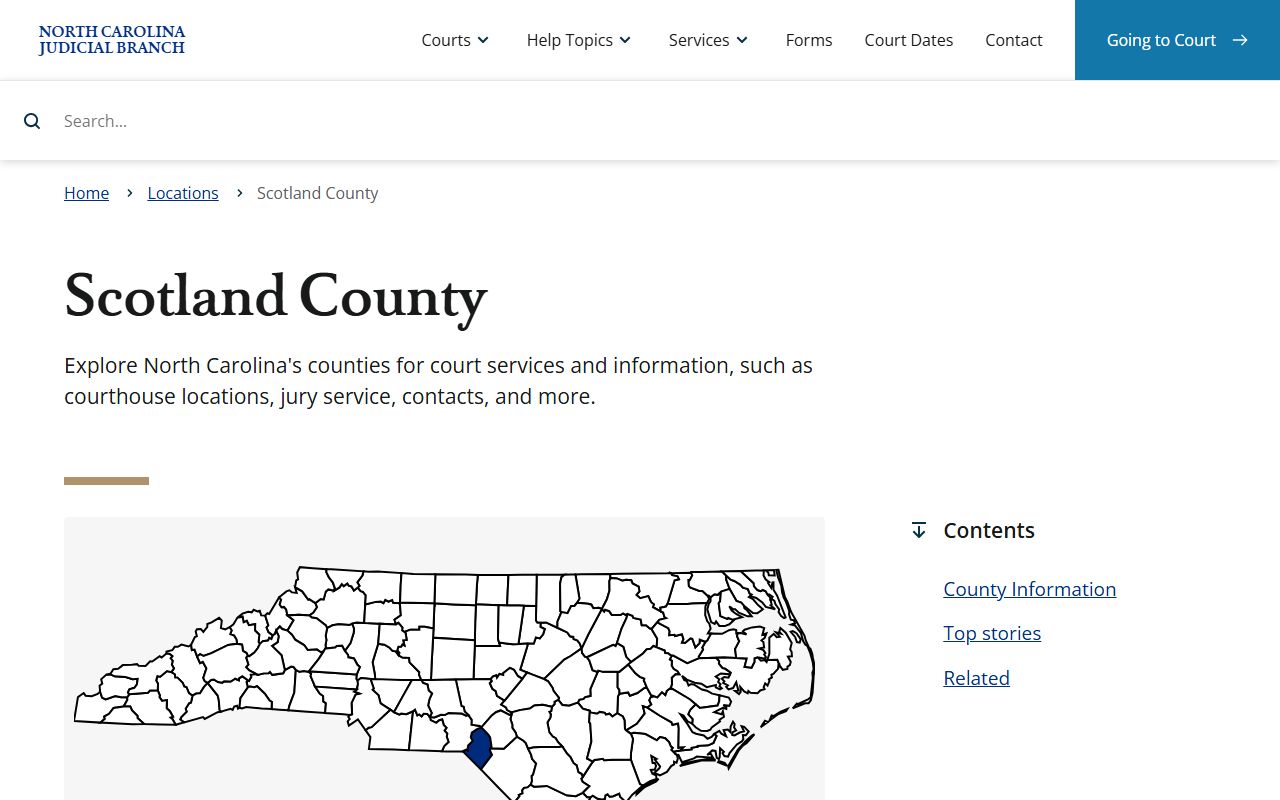
Scotland County criminal history records are on file at the Clerk of Superior Court in Laurinburg. This small county sits in the south-central part of North Carolina near the South Carolina border. The clerk manages all criminal case files for the county. Laurinburg is the county seat and the only city of size here. Criminal history records in Scotland County include felony and misdemeanor cases heard in local courts. You can request these records in person or through the state court system.
Scotland County Criminal Court Clerk
Clerk Walter Mcrae leads the Scotland County Clerk of Superior Court office. The office is at 212 Biggs Street in Laurinburg. Staff handle criminal case records, civil files, and estate matters. For criminal history searches, this is where you go.
You can visit in person to search records. Bring a valid ID. Tell the staff what you need. They can search by name or case number. A certified copy costs $25. Plain copies cost less per page. Most lookups are fast. Older cases may take more time to pull from storage.
The mailing address is PO Box 769, Laurinburg, NC 28353. You can send a written request for criminal history records by mail. Include the full name of the person, any dates you know, and a check for the copy fee. Call (910) 266-4400 to confirm fees before you send a request to Scotland County.
| Court |
Scotland County Clerk of Superior Court 212 Biggs Street Laurinburg, NC 28352 Mailing: PO Box 769, Laurinburg, NC 28353 Phone: (910) 266-4400 |
|---|---|
| Hours | Monday through Friday, 8:00 AM to 5:00 PM |
| Website | nccourts.gov/locations/scotland-county |
Scotland County Criminal History Online
You do not have to go to Laurinburg to search Scotland County criminal records. The state runs an online portal. The NC eCourts system has case data from all counties. Search by name or case number. You get basic details for free.
The online system shows charge types, court dates, and case outcomes. It covers both district and superior court cases in Scotland County. It does not show the full case file. For complete documents, contact the clerk directly. The portal is a good first step for any criminal history search in Scotland County.
Note: The eCourts portal may not have every old case. Some records from years past were not added to the digital system. For those, an in-person visit to the Scotland County courthouse is the best option.
Criminal Records in Scotland County
Scotland County criminal history records cover all cases that go through local courts. This means felonies and misdemeanors. It also includes infractions, though those are minor. Each case creates a file at the clerk's office.
A typical criminal case file contains:
- Arrest warrant or criminal summons
- Indictment or information document
- Motions filed by either side
- Court orders from the judge
- Plea transcript or trial record
- Judgment and sentencing order
These records are public under NCGS 132-1. Anyone can view them. You do not need a reason. The Scotland County clerk must let you see them if you ask. Some records are not public. Sealed cases, juvenile records, and expunged files are off limits. But most adult criminal history records in Scotland County are open.
The judgment is the most requested document. It shows the charge, the plea or verdict, and the sentence. Certified copies of judgments from Scotland County cost $25 each.
Statewide Criminal History Resources
A county search covers only Scotland County. For a wider view, use state tools. The NC State Bureau of Investigation keeps a criminal record database for all of North Carolina. Under NCGS 114-19, the SBI collects arrest and conviction data from every county.
You can request a state-level criminal history check from the SBI. This shows records from all 100 counties. It costs a fee. Results come back in a few business days. This is broader than a Scotland County search alone.
The NC Department of Public Safety also has tools. The offender search shows people in prison or on supervision. It is free. It does not replace a full criminal history search, but it adds useful data for Scotland County and beyond.
Scotland County Record Expunctions
Some criminal records in Scotland County can be erased through expunction. North Carolina law provides several paths for this. The statute you use depends on the type of case and the outcome.
NCGS 15A-146 covers dismissed charges and not guilty verdicts. NCGS 15A-145 applies to certain first offenders. NCGS 15A-145.5 handles some drug crimes. Each has its own rules on who qualifies and how long you must wait.
To start, get the right form from nccourts.gov. Fill it out and file it with the Scotland County Clerk of Superior Court. A judge will review it. If granted, the criminal history record is removed from public access. The SBI updates its database too. The process takes months in most cases.
Note: Not all crimes qualify for expunction in Scotland County. Serious felonies and repeat offenses are often excluded. Check the statutes or talk to a lawyer before you file.
Public Access to Criminal History
North Carolina treats court records as public property. NCGS 132-1 says all records made by a government body belong to the people. Criminal history records at the Scotland County courthouse fall under this law. NCGS 132-6.2 sets rules for how fast the clerk must respond to a request.
You can ask in person, by mail, or by phone. There is no special form. Just say what you want. The clerk will search for it. You can view records at the courthouse for free. Copies have a per-page charge. Certified copies cost $25 in Scotland County. The clerk must respond in a reasonable time.
Legal Aid of North Carolina can help if you have trouble getting records. They also help with expunctions and other legal matters. Their services are free for those who qualify based on income in Scotland County.
Scotland County Court System
Scotland County has two levels of criminal court. District court hears misdemeanors and infractions. Superior court handles felonies. Both operate out of the courthouse in Laurinburg. The same clerk manages records for both courts.
A case starts when charges are filed. The defendant has a first appearance. The judge sets bond. The case then moves through the system. It may end in a plea deal, a trial, or a dismissal. Each step creates a record that stays on file at the Scotland County courthouse.
Felony cases go through a grand jury before trial. The grand jury decides if there is enough evidence to proceed. This step creates an indictment, which is part of the criminal history record. All of these documents are stored by the Scotland County clerk and are available for public review under state law.
Nearby Counties
These counties neighbor Scotland County. Criminal cases are filed where the offense happened. Make sure you search the right county for the records you need.