
Martin County Criminal History Lookup
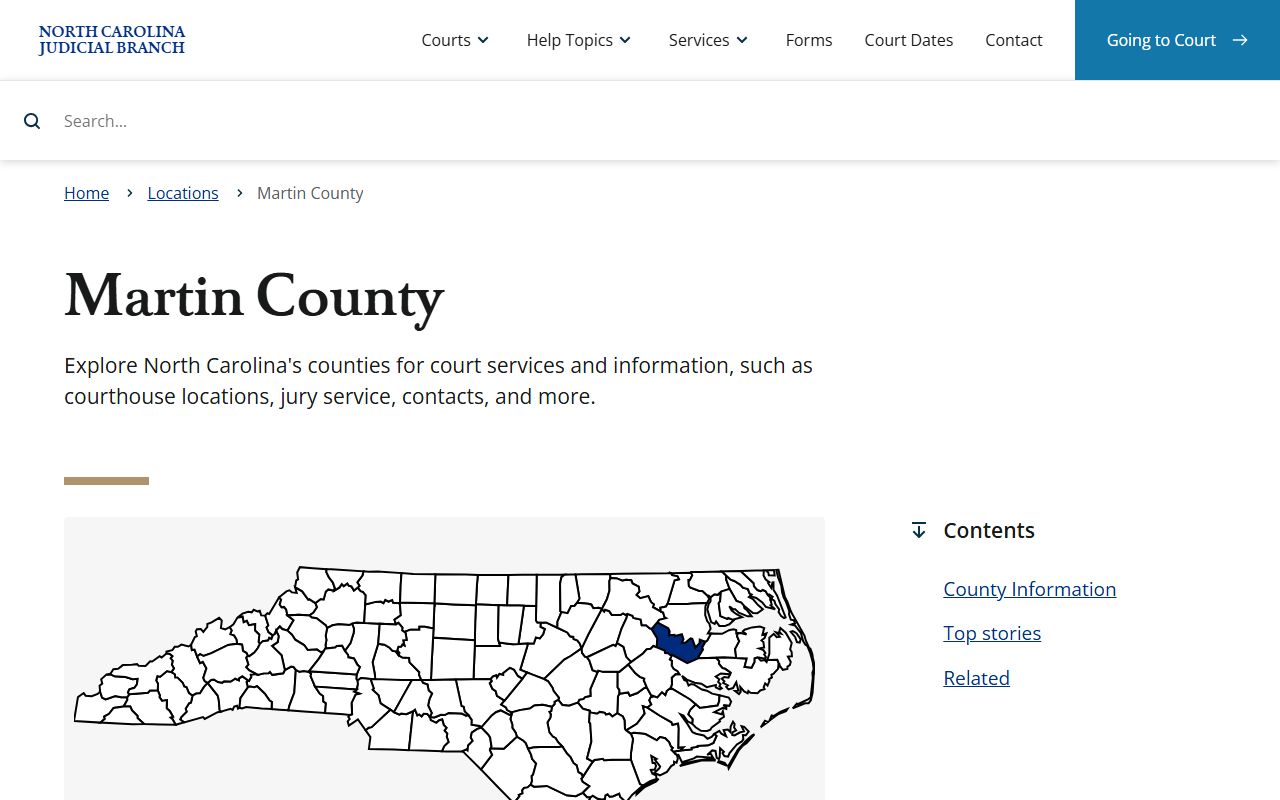
Martin County criminal history records are on file at the Clerk of Superior Court in Williamston. The county lies in the inner coastal plain of eastern North Carolina. Williamston is the county seat. The clerk keeps all criminal case records for Martin County, from old files to new ones. The Martin County Governmental Center houses the court. Anyone can request criminal history records from this office. The records are public under state law.
Martin County Criminal History Office
Clerk Tonya Leggett heads the Martin County Clerk of Superior Court. The office is at 305 East Main Street in Williamston. Mail can go to PO Box 807, Williamston, NC 27892. The phone number is (252) 809-5800.
The court sits inside the Martin County Governmental Center. This building holds several county offices. The clerk office is where you go for criminal history records. Staff can search records and make copies for you. Walk-ins are welcome during business hours.
| Court |
Martin County Clerk of Superior Court Martin County Governmental Center 305 East Main Street Williamston, NC 27892 PO Box 807 Phone: (252) 809-5800 |
|---|---|
| Hours | Monday through Friday, 8:00 AM to 5:00 PM |
| Website | nccourts.gov/locations/martin-county |
How to Search Criminal Records
There are a few ways to search Martin County criminal history records. You can go to the clerk office in person. This is the best way to get full case files. Staff will pull the records you need. Bring a name or case number to speed up the search.
Online searches are also an option. The NC eCourts portal covers Martin County. You can look up criminal cases by name or case number. The portal shows charges, court dates, and outcomes. It is free for basic data. Full documents require a visit to the clerk or a written request.
The SBI runs a statewide criminal history database under NCGS 114-19. A request to the NC State Bureau of Investigation pulls records from Martin County and all other counties. This is a broader search than the county-level lookup. It costs a fee.
Note: Phone lookups are limited. The clerk may confirm if a case exists but will not read full records over the phone. For detailed criminal history from Martin County, visit in person or use the online portal.
Criminal Cases in Martin County
Martin County courts handle many types of criminal cases. Superior Court hears felony cases. These include drug trafficking, armed robbery, and serious assault charges. District Court covers misdemeanors and traffic offenses. Both courts create criminal history records that the clerk stores.
DWI cases are common in Martin County. A DWI charge creates a criminal record. The case file includes the arrest report, test results, and court orders. Convictions stay on the criminal history for a long time. North Carolina law limits when DWI records can be expunged.
Drug cases also make up a share of the Martin County criminal docket. Charges range from simple possession to trafficking. The penalties vary by drug type and amount. Each case generates records at the clerk office. These records are part of the public criminal history file in Martin County.
Property crimes like larceny and breaking and entering appear often as well. Domestic violence cases create criminal records too. Protective orders are filed separately but tie to the criminal case. All of these records are on file at the Martin County clerk office in Williamston.
Martin County Public Records Access
Criminal history records in Martin County are public. North Carolina law is clear on this. NCGS 132-1 says government records belong to the people. Court records fall under this rule. You can ask to see any criminal case file in Martin County.
To get copies, go to the clerk office. Plain copies cost less than certified ones. Certified copies carry the clerk seal and are valid for legal use. The fee for copies follows the state schedule. Call (252) 809-5800 to ask about current rates in Martin County.
Written requests also work. Send a letter to the clerk at PO Box 807, Williamston, NC 27892. State the case name or number. Say what records you want. The clerk will respond with the records or let you know the cost. NCGS 132-6.2 sets the rules for how agencies handle these requests.
Criminal History Expunctions
Some criminal records in Martin County can be expunged. An expunction erases the record from public view. The law on this is in NCGS 15A-145 through 15A-150. Each section covers a different type of case.
Charges that were dismissed or ended in a not guilty verdict are the simplest to expunge. You file a petition with the Martin County clerk. A judge reviews it. If granted, the record is sealed. First-time drug offenses under NCGS 15A-145.2 may also qualify. There is a waiting period and other conditions.
Forms for expunction petitions are on the NC Courts forms page. Filing fees apply. The process can take months. Legal Aid of North Carolina at legalaidnc.org may help if you qualify based on income. They serve Martin County through their eastern office.
Note: Not all criminal history records qualify for expunction. Serious felonies and repeat offenses are usually not eligible. Check the specific statute for your case type before filing in Martin County.
State Criminal History Resources
Beyond Martin County, state agencies hold criminal history data. The NC Department of Public Safety at ncdps.gov runs the prison and probation systems. Their offender search tool shows inmates and people on supervision from any county.
The NC Courts system at nccourts.gov has guides on court records access. The court records help page explains what is available and how to get it. This is useful for Martin County and all other counties.
The expunctions page on the NC Courts site has detailed info about clearing criminal records. It covers eligibility, forms, and steps. If you have a Martin County criminal history record you want to clear, start there.
Martin County Criminal Court Process
A criminal case in Martin County starts with an arrest or a citation. The person comes to court for a first appearance. The judge explains the charges. Bond is set at this hearing. The case then moves through the system.
Most cases resolve through plea deals. The defendant agrees to plead guilty to a charge in exchange for a known sentence. The plea and judgment go into the criminal history file. Cases that go to trial take longer. A jury or judge decides guilt. The verdict and any sentence become part of the record.
After a case ends, the criminal history record stays on file at the Martin County clerk office. Convictions remain unless expunged. Dismissed cases also stay in the record unless the person files for expunction. This means a search of Martin County criminal history may show both active and old closed cases.
Nearby Counties
These counties border Martin County. Criminal cases are filed in the county where the offense happened. Make sure you search the right county for the records you need.